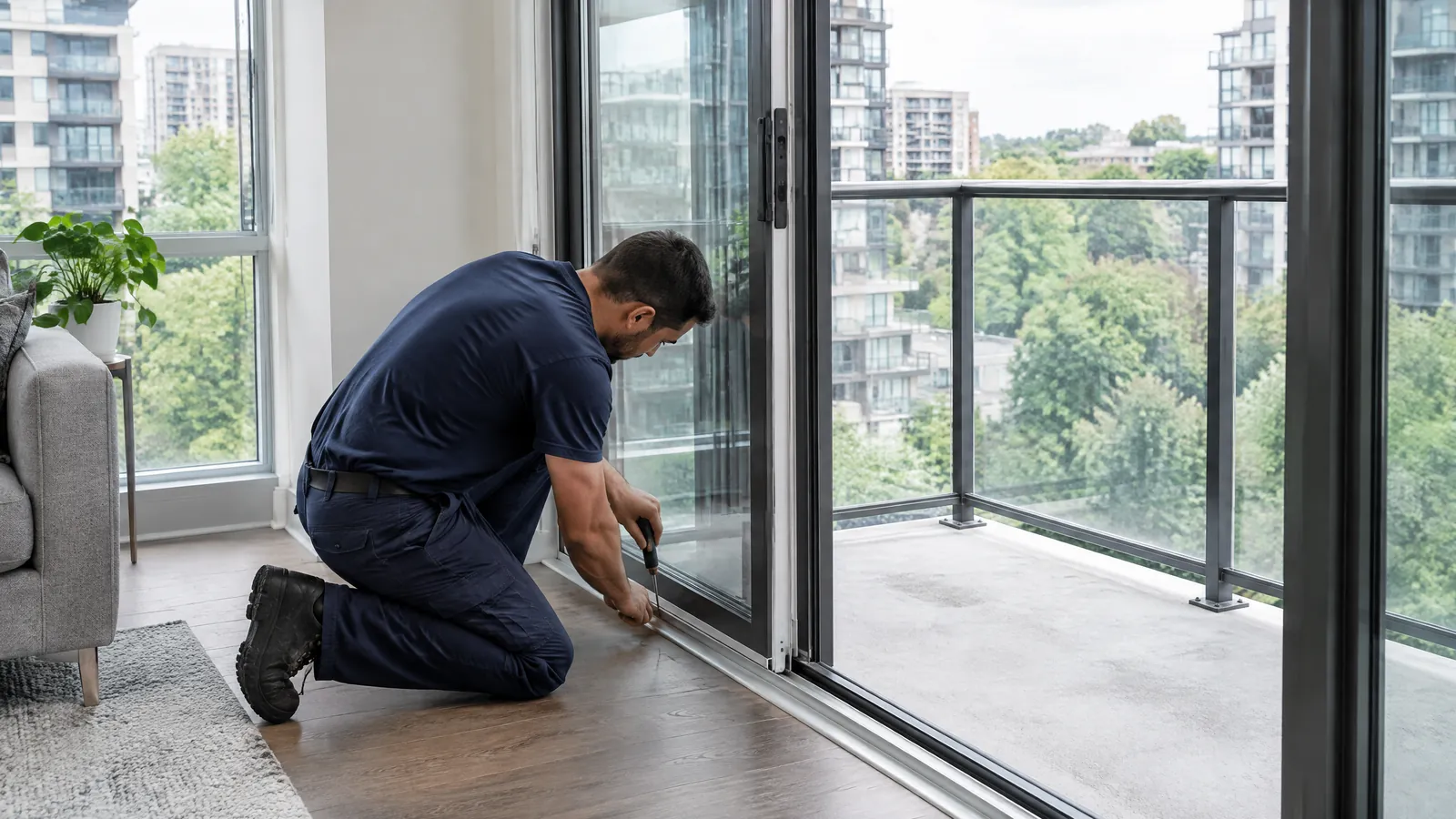
A condo suite repair looks like any apartment repair until the trade needs the water off, a part carried up 30 floors, or a hole cut in a wall that belongs to the corporation. For how a rented unit sits between the owner, the tenant and the corporation, see condo rentals.
01
We find where the suite ends before we cut
The declaration and the description registered with it draw the unit boundary. The line usually falls like this:
Inside the unitFixtures, cabinets and in-suite appliances.
Common elementsRisers, stacks and the pipes that serve more than one suite.
Often common, sometimes the owner'sWindows, exterior walls and balconies, with a balcony sometimes given to the owner for exclusive use and upkeep.
02
Upgrades after a flood are usually the owner's
When the corporation repairs a unit after damage, it restores it to the standard unit for that class, not to what the owner installed later (section 89). Engineered hardwood over the builder's carpet, a custom vanity, pot lights: those are improvements, and after a flood they are usually the owner's to replace. We photograph finishes before work starts so the insurer can separate the two.
03
The water shut off is management's call
Many suites have no shut off of their own, or one hidden behind an access panel in a closet. A riser shut off drains several floors and needs notice to the other suites. We confirm the shut off point and the window with management before the plumber is booked, not while the plumber waits in the lobby.
04
A dishwasher swap is a logistics job first
The service elevator booked and padded, the loading dock slot, trade parking, measurements checked against the old unit, and the old appliance hauled away the same visit. See appliance installation.
05
Work that touches the common elements waits for the board
Moving a dryer vent through an exterior wall, adding a bathroom fan duct or replacing a window can touch the common elements. An owner can only make that change with a board resolution and a written agreement with the corporation on cost, upkeep and insurance (section 98). We flag the job and stop until that is in place.
06
Fix it on your schedule, not the board's
If an owner lets the unit slide and the condition risks damage or injury, the corporation can do the work itself and add the cost to that unit's common expenses (section 92). A leaking supply line fixed on your schedule costs less than one fixed on the board's.
07
Questions
Who pays to replace upgraded flooring after a flood in a condo unit?
Often the owner. The corporation's duty to repair after damage does not cover improvements to a unit, and what counts as an improvement is measured against the standard unit for that class of unit. The declaration can also move the repair itself to the owner.
Can we replace a window in a rented condo unit ourselves?
Check the declaration first. Windows are often part of the common elements, and an owner can only alter the common elements with a board resolution and a written agreement with the corporation under section 98 of the Condominium Act.
What happens if a condo owner does not fix something in the unit?
If the owner fails to maintain the unit within a reasonable time and the failure risks damage to the property or injury, section 92 lets the corporation do the work and add the cost to the unit's common expenses.
Who books the service elevator for a condo repair?
The management office takes the booking under the building's rules. We make the booking and send the trade's details and any certificate management asks for before the day of the job.
What counts as an emergency in a condo suite?
Plumbing, electrical, major appliance and heating or cooling failures, lockouts, and a door that will not lock. These are answered 24 hours a day, 7 days a week, by phone and text. This website is not an emergency line.