A work order report is the record that a repair happened, why it was needed and what was done. Most of the time nobody reads it. It matters on the day someone asks: an owner questioning an invoice, a board charging a unit back, a landlord recovering damage, an adjuster on a water claim.
Who reads it, and what they ask
The adjuster wants to know what happened, when, and what it took to put right. The Insurance Bureau of Canada tells policyholders to photograph the damage, keep receipts and invoices, and act to limit further damage.
The condo board wants to know where the damage started. Under section 105 of the Condominium Act, 1998, when an owner, a tenant or someone living in the unit with the owner's permission causes damage to the unit, the corporation can add the lesser of the repair cost and its insurance deductible to that unit's common expenses. That only holds up with the unit, the cause and the cost on paper.
The Landlord and Tenant Board hears a landlord's claim for undue damage a tenant caused wilfully or negligently (sections 34 and 89 of the Residential Tenancies Act). Normal wear and tear is not undue damage, so the record has to show what was there before.
The owner wants to know the invoice matches the work they approved.
What the report should contain
- Your reference number, the job number, the property and the unit.
- What was reported, by whom and when.
- What was found: the cause, in plain words.
- What was done, matched to the approved scope.
- The parts used.
- Before and after photos, paired and timed.
- Sign off from the person who reported it.
- The warranty period and its end date.
- A timeline of every step, with who and when.
Photos are where most reports fall short
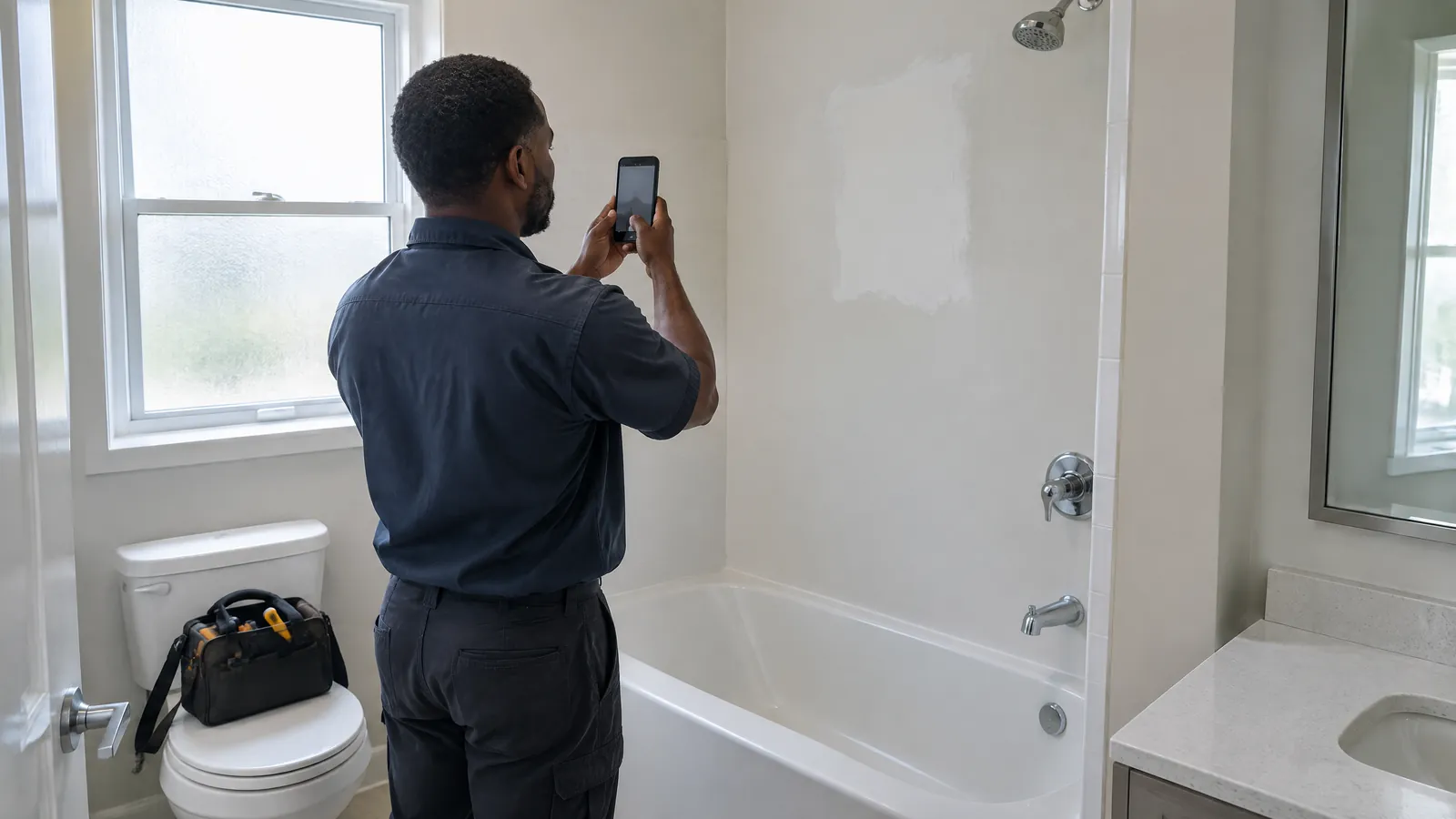
A photo of a new part proves a part was installed. A pair taken from the same angle, before and after, each with its time, proves what changed. Take a wide shot that shows where in the unit, then the close up. For water, photograph the source and the damage below it.
Keep the report with the invoice
An invoice alone answers how much. When the invoice carries your reference and the report travels with it, the owner, the board and the adjuster all read the same record.
Every Roundhouse job closes with this report, in the same format from every trade. See a sample report or request work.