The repair is rarely the slow part. The work around it is, and with separate trades that work repeats for every vendor. There is no industry figure worth quoting here, so this post shows you how to count it for your own buildings.
What repeats with every vendor
Paperwork before the first job. An insurance certificate, and a WSIB clearance. The principal who hires a contractor may be liable for that contractor's unpaid WSIB premiums, up to the labour portion of the contract, and for construction work the clearance has to be obtained before the work begins (WSIB policies 14-02-04 and 14-02-19). Five vendors is five files to keep current.
Notice for every visit. Entry to an occupied unit for a repair needs 24 hours written notice with the reason and a time between 8 a.m. and 8 p.m., unless it is an emergency or the tenant agrees at the time (sections 26 and 27 of the Residential Tenancies Act). A plumber on Tuesday and a painter on Thursday is two notices and two access arrangements.
An invoice to match. Each vendor has its own format and its own numbers, and each one is checked against a quote before it is paid.
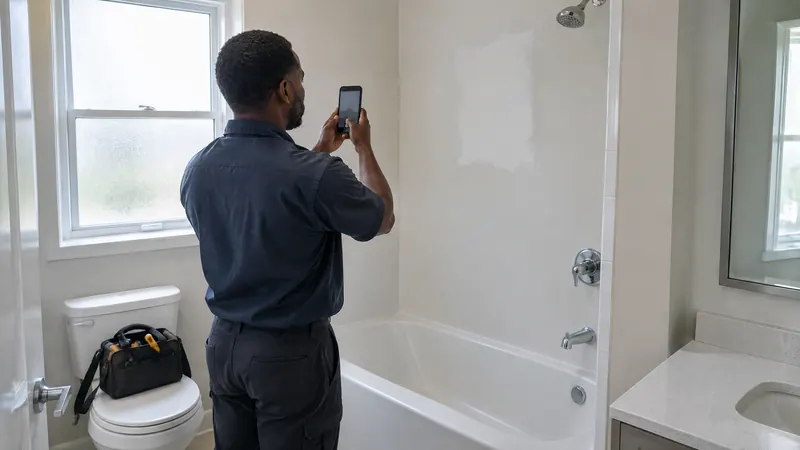
A record in pieces. The plumber's photos are in a text thread, the painter's in an email, and the notes are in your head.
Where it breaks: the job between two trades
A leak under a bathroom. The plumber fixes the pipe, someone else patches the ceiling below, a third paints it. When the patch cracks in a month, each warranty covers its own part, and you are the one working out whose part failed.
Count it for your own buildings
Take last month's work orders. For each one, count the vendors involved, the notices sent, the invoices matched and the calls made to chase a booking or a photo. Multiply by twelve. That is the number to weigh against one vendor.
What one vendor changes
One set of paperwork. Trades booked into one window go on one notice. One invoice, one record by building and unit, and one company that answers for the whole job. Roundhouse checks every trade's insurance, and WSIB clearance before booking and before every payment. See how we vet trades and how a job runs.
Reviewed October 2, 2026